
We say SALUS Sense can help reduce energy use by up to 20%. Here is where that number comes from and what it means.
What is SALUS Sense?
SALUS Sense is an AI-based feature in the SALUS Premium Lite app designed to reduce unnecessary heating waste over time.
It learns how quickly each room warms up and cools down, using past indoor temperatures, how long your heating has been running, and the outdoor temperature. SALUS Sense then works quietly in the background. It can stop heating a little early when the room will reach your target anyway, avoid overshooting, skip unnecessary heating cycles, and switch off sooner when a scheduled temperature drop is coming. You still set the temperature you want. SALUS Sense just gets there more efficiently.
How we tested it and what we found
We looked at SALUS Sense in three ways: in the lab, in a large European field test, and in an early trial in Iceland. We measure how long the thermostat calls for heat (the “relay ON time”), because less time heating generally means less energy used.
- In lab tests on radiator valves and underfloor heating under controlled conditions, the average saving was 8%, with results ranging from 0% to 30% depending on the setup.
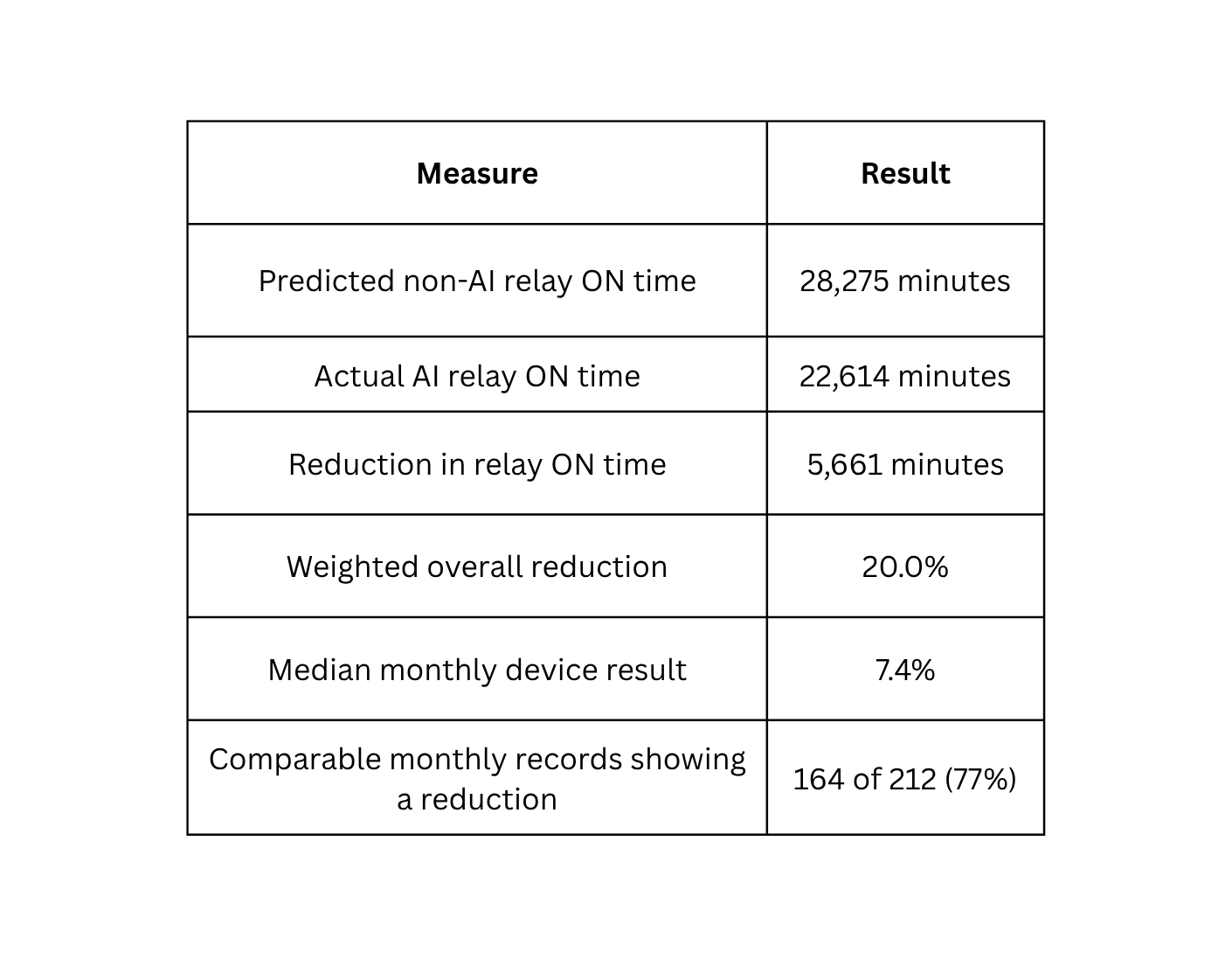
- In our European field test, which we ran between November 2023 and April 2024 and was the longest, we analysed 37 thermostats across Europe: 212 comparable device-months in total (Table1). Heating ON time came to 22,614 minutes with Sense, against a predicted 28,275 without it. That is a 20.0% reduction overall (Table 2).
- In our Iceland trial in April 2025, we looked at 40 devices during their first seven days with Sense. The average reduction was 5.5%. This was a very short window, and some devices had only just been added. Radiator-valve optimization was also deliberately kept gentle at that stage. It shows that learning time and heating type matter.
Table 1
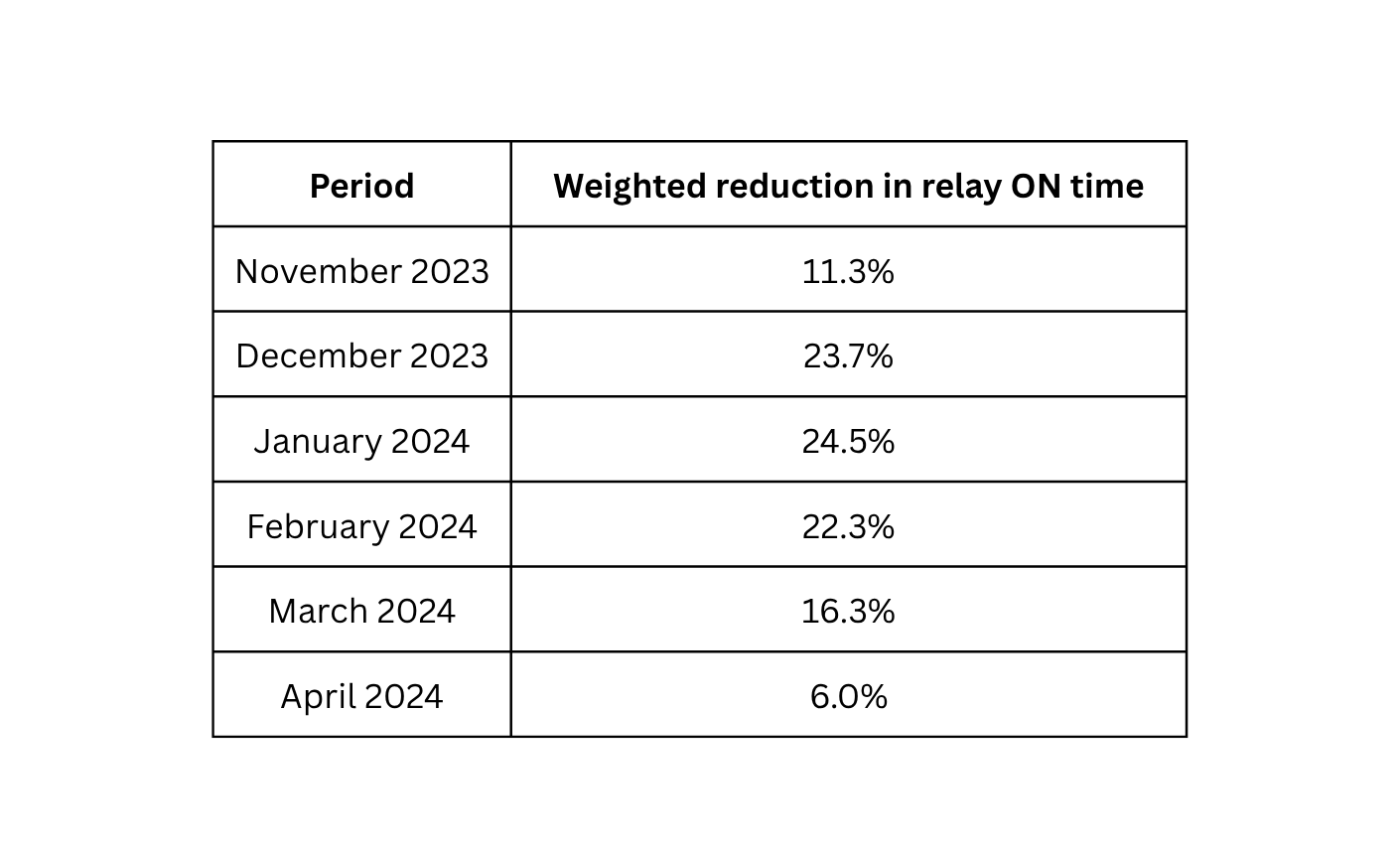
*Savings were strongest in the coldest months, when heating works hardest.
Table 2
The full picture
The 20% figure is an overall result, and individual homes varied.
In 77% of device-months (164 of 212) we saw a reduction. The median device-month was a 7.4% reduction. Lab tests on radiator valves and underfloor heating showed an average saving of 8%, with results from 0% to 30% depending on conditions. So “up to 20%” describes what can be achieved, not what every home will see.
What to expect
Many customers will see smaller savings than the headline, and some will see more. SALUS Sense works best once it has had time to learn your home. Savings are not guaranteed.
FAQs
Yes – up to 20% is the maximum claim supported by Salus lab and field-test evidence. The tested measure was a reduction in heating-control relay ON time: the time during which the thermostat is calling for heat.
In practice, less unnecessary heating-system run time may reduce heating energy use. However, the result for any individual home will vary.
NO! Up to 20% is not an average and it is not a guarantee.
Savings depend on how your property and heating system behave. Some homes may see a smaller benefit, while others may see a larger reduction in heating demand under particular conditions. The feature is designed to optimise your system; it cannot remove the heat your home needs to stay comfortable.
Not necessarily. The 20% claim refers to reductions in heating-control relay ON time observed in Salus testing. Relay ON time is a useful indicator of heating demand, but it is not the same as a direct measurement of your gas, electricity or fuel bill.
Your bill savings will depend on factors such as your energy tariff, boiler or heat-source efficiency, building insulation, outdoor weather and the way you use your heating.
Every home is different. Results can be affected by:
- the size, insulation and orientation of the room;
- your heating system, boiler or heat-source output, and water temperature;
- whether you use radiators, underfloor heating or thermostatic radiator valves;
- outdoor temperature and changing weather;
- your heating schedules and selected temperatures;
- household occupancy, open windows and manual temperature changes; and
- how much operating data the system has had time to learn from.
The feature needs time to learn how your rooms and heating system respond under different conditions. The more relevant temperature and operating history it has, the better it can predict when heating is needed and when it can be reduced.
For this reason, short early observation periods may not show the same result as a longer period of use.
A small or zero estimated saving does not necessarily mean the feature is not working. It can mean that there was little unnecessary heating demand to remove in that period, or that the system is still learning.
Results may also be lower in mild weather, during low-heating-use periods, where existing thermostat control is already efficient, or for certain heating configurations. In the Iceland early-stage trial, results also varied materially by paired-device type and maturity of the learning period.
Salus testing and product materials include: radiator/TRV and underfloor-heating scenarios, as well as wired control configurations. However, the scale of benefit can differ by heating system and setup.
For the best experience, ensure that your compatible Salus devices are correctly installed, connected and enabled for energy saving in the app.